Hong Kong in Cantonese, meaning fragrant harbor is a place with multiple personalities, as a result of being both Cantonese Chinese and under a more recent contemporary ex-British influence. Today, the former British colony is a major tourism destination for China's increasingly affluent mainland population. It is also an important hub in East Asia with global connections to many of the world's cities. It is a unique destination that has absorbed people and cultural influences from places as diverse as Vietnam and Vancouver and proudly proclaims itself to be Asia's World City.
The Hong Kong Special Administrative Region (SAR) of the People's Republic of China is much more than a harbour city. The traveller weary of its crowded streets may be tempted to describe it as Hong Kongcrete. Yet, this territory with its cloudy mountains and rocky islands is mostly a rural landscape. Much of the countryside is classified as Country Park and, although 7 million people are never far away, it is possible to find pockets of wilderness that will reward the more intrepid tourist.
Hong Kong has a subtropical climate with at least one season to match your comfort zone. Boasting one of the world's best airports, it is the ideal stopover for those who wish to travel deeper into the Orient.
The amazing views of Hong Kong
Nothing quite matches Hong Kong from above but, then, it’s difficult to get things wrong with mountains on one side, water on the other and skyscrapers in the middle to provide the platform. And it’s not just for thrill-seekers; fantastic views of the harbour form the backdrop of some excellent restaurants and a fair number of bars and clubs as well.
Remember, too, that it’s not just about Hong Kong from the top down. Some of the most dramatic sights in the territory are those of Hong Kong from the ground up. Just stand at the water’s edge on the promenade in Tsim Sha Tsui and you’ll understand. Views on the move are another good way to soak up Hong Kong’s uniquely energetic vistas, whether it means boarding a Star Ferry or watching an urban panorama scroll by aboard a clanking, ancient tram.
The rush of energy you get from taking in this futuristic megacity’s outline and the amazing natural topography on which it’s built is immense. You need distance and perspective to do this properly and getting as high as you can (we mean physically) is one good way to enjoy this simple thrill. Head for the Bank of China Tower designed by China-born American architect IM Pei in 1990. Take the express lift to the 43rd floor from where you’ll be rewarded with a panoramic view over Hong Kong.
From here you are about the same height as the Hongkong & Shanghai Bank to the northwest. It’s a pity that you aren’t allowed to go any higher, as it’s exciting swaying with the wind at the top. Even higher (though arguably not as dramatic) is the view from the windows of the Hong Kong Monetary Authority Information Centre on the 55th floor of the Two International Finance Centre.
The highest point of The Peak has been the place to live ever since the British came here in the 19th century. The taipans built summer houses here to escape the heat and humidity (it’s usually about 5°C cooler than down below). The Peak remains the most fashionable – and expensive – area to live in Hong Kong and is the territory’s foremost tourist destination. Not only is the view from the summit one of the most spectacular cityscapes in the world, it’s a good way to get Hong Kong into perspective. And the only way up, as far as we are concerned, is via the Peak Tram.
Rising above the Peak Tram terminus is the seven-storey Peak Tower, an anvil-shaped building containing shops, restaurants, tourist tat and a viewing terrace. Opposite is the Peak Galleria, a three-storey mall of shops and restaurants. Like the tower, it’s designed to withstand winds of up to 270km/h, theoretically more than the maximum velocity of a No 10 typhoon.
The view is equally enthralling from the bottom up. For the ultimate show-stopping view, stand at the harbour edge in Tsim Sha Tsui and take in Hong Kong Island’s skyscrapers’ gradient-defying march up steep jungle slopes.
Alternatively, and for a mere $2, you can board the upper deck of the Star Ferry and take in this breathtaking city while it’s bathed in a neon glow. The ferry is part of a small fleet of diesel-electric boats first launched in 1888. With names like Morning Star, Celestial Star and Twinkling Star, the ferries are most romantic at night, festively strung with lights , as the city buildings beam onto the rippling water.
If possible, try to take the trip on a clear night from Kowloon side to Central; it’s not half as dramatic in the other direction. The trip takes about nine minutes (as long as it used to take to read the now defunct Hong Kong Star, a lowbrow tabloid newspaper, it was said), and departures are very frequent. Indeed, morning and evening, the Star Ferry is a genuinely useful and commonly used way for local people to hop from island to mainland and back again.
Get stuffed in Hong Kong
It is hard to have a conversation in Hong Kong without mentioning food, especially when many still greet each other by asking, ‘Have you eaten yet?’. The vast majority of Hong Kong’s 10,000-odd restaurants serve Chinese food, of course.
Cantonese is by far the most popular Chinese cuisine in Hong Kong, but Chiu Chow, Shanghainese, Sichuanese and Northern Chinese are also widely available.
Cantonese cuisine is famously fresh: there’s an emphasis on freshly slaughtered meat (mostly pork and chicken) and seafood. Simple techniques such as steaming and stir-frying allow the ingredients to retain their delicate and well-balanced flavours.
Chiu Chow cuisine makes liberal use of garlic, vinegar and sauces; it’s famous for goose and seafood dishes. Shanghainese cooking uses a lot of salted and preserved foods and relies on stewing, braising and frying. Sichuanese is the most fiery, making great use of chillies and pungent peppercorns. Northern Chinese food uses a lot of oils (eg sesame and chilli) coupled with ingredients such as vinegar, garlic, spring onions, bean paste and dark soy sauce.
Steamed bread, dumplings and noodles are preferred to rice, and lamb and mutton, seldom seen on other Chinese menus, are also popular.
The full range of international fare is on your doorstep, too: Italian, Japanese, British pub grub, French, Korean, Indian and Mediterranean food is all well represented across most price ranges. Central is the best pick for Western restaurants, especially Soho, though you’ll also find a fair few in Tsim Sha Tsui.
Hong Kong is home to Yum cha and if you haven’t experienced the phenomena, then don’t leave Hong Kong without stuffing yourself silly during this unique dining practice. Yum cha (literally ‘drink tea’) is the usual way to refer to dim sum, the uniquely Cantonese ‘meal’ eaten as breakfast, brunch or lunch between about 7am and 3pm. Eating dim sum is a social occasion, consisting of many separate dishes that are meant to be shared.
The bigger your group, the better. Dim sum delicacies are normally steamed in small bamboo baskets. The baskets are stacked up on trolleys and rolled around the dining room. You don’t need a menu (though these exist, too, but are almost always in Chinese); just stop the waiter and choose something from the trolley. It will be marked down on a bill left on the table.
The trick is not to order everything at once. Each trolley has a different selection, so take your time and order as they come. It’s said that there are about a thousand dim sum dishes, but you’d be doing well to sample 10 in one sitting. Dim sum restaurants are normally brightly lit and very large and noisy – it’s rather like eating in an aircraft hangar.
For street food, head for Woo Sung St in the Temple Street Night Market, which runs parallel to the east, or to the section of Temple St north of the temple towards Man Ming Lane. You can get anything from a fried snack to go or a simple bowl of noodles to a full meal served at your very own kerbside table.
There are a few seafood and hotpot restaurants as well, or you might pop into Mido, Hong Kong’s best known cha chan tang (cafe with local dishes). You’ll also find a surfeit of fortune-tellers and herbalists and some free, open-air Cantonese opera performances here.
The Chinese are not traditionally known for their sweet tooth and you can head to the colourful wholesale fruit market (corner Shek Lung and Reclamation Sts), for a healthy dessert here. The market is always a hive of activity from midnight to dawn.
Alternatively, you can try a steamed cake that can be eaten occasionally as dim sum, often with strong tea. The more daring can slurp a sweet soup, a southern specialty made by boiling pulses, seeds and root vegetables, are consumed as a late-night snack, for their taste and their positive effects on health.
Traditional desserts do not contain dairy products, as many Chinese are lactose-intolerant. All this, however, has been changing as people adopt and increasingly Westernised way of life. These days, many Chinese teenagers call themselves “chocoholics”, and office workers talk about saving stomach space for cheesecake!
Shopping in Hong Kong
While any international brand worthy of its logo has at least one outlet here, Hong Kong’s reputation as a bargain hunter’s paradise is largely a thing of the past. So what’s worth shopping for? Clothing (off the peg or tailored), shoes, jewellery, luggage and, to a lesser degree nowadays, cameras and electronic goods are the city’s strong suits. Excellent art and antiques shops also abound.
Bargaining

Bargaining is a way of life at retail outlets throughout Hong Kong, with the exception of department stores and clothing chain shops, where the prices marked are the prices paid. Some visitors operate on the theory that you can get the goods for half the price originally quoted. Many Hong Kong residents believe that if you can bargain something down that low, then you shouldn’t be buying from that shop anyway. If the business is that crooked – and many are, particularly in the Tsim Sha Tsui tourist ghetto – it will probably find other ways to cheat you (such as selling you electronic goods with missing components or no international warranty).
Guarantee & warranty Every guarantee should carry a complete description of the item (including the model and serial numbers), as well as the date of purchase, the name and address of the shop it was purchased from, and the shop’s official name chop (stamp). A common practice is to sell grey-market equipment (ie imported by somebody other than the official local agent). Such equipment may have no guarantee at all, or the guarantee may be valid only in the country of manufacture (which will probably be either China or Japan).
Antiques Most of Hong Kong Island’s antique shops are bunched along Wyndham St and Hollywood Rd in Central and Sheung Wan. The shops at the western end of Hollywood Rd tend to be cheaper and carry more dubious ‘antiques’ – tread carefully through this minefield of reproductions, books, magazines, Chinese propaganda posters, badges from the Cultural Revolution and so on. For Chinese handicrafts and other goods (hand-carved wooden pieces, ceramics, paintings, cloisonné, silk garments), the main places to go are the large China-run emporiums scattered throughout the territory, such as Chinese Arts & Crafts and Yue Hwa Chinese Products Emporium.
Clothing The best places to find designer fashion and top-end boutiques are in the big shopping centres and malls, especially Landmark in Central, Pacific Place in Admiralty and Festival Walk in Kowloon Tong. The best hunting grounds for warehouse sales and factory extras are generally in Tsim Sha Tsui at the eastern end of Granville Rd; check out Austin Ave and Chatham Rd South as well. On Hong Kong Island, Jardine’s Bazaar in Causeway Bay has low-cost garments and there are several sample shops and places to pick up cheap jeans in Lee Garden Rd. The street markets on Temple St in Yau Ma Tei and Tung Choi St in Mong Kok have the cheapest clothes. You may also try Li Yuen St East and Li Yuen St West, two narrow alleyways linking Des Voeux Rd Central with Queen’s Rd Central. They are a jumble of inexpensive clothing, handbags, backpacks and costume jewellery.
Computers 
Hong Kong is a popular, competitively priced place to buy personal computers. Most people buy their computers in Kowloon, where there are loads of centres selling computers and related equipment. There’s a much greater choice and prices are lower, but ‘caveat emptor’ is the phrase to bear in mind as you browse. Hong Kong Island does have a couple of reasonable computer arcades, including the Wan Chai Computer Centre.
Gems & jewellery 
The Chinese attribute various magical qualities to jade, including the power to prevent ageing and accidents. The circular disc with a central hole worn around many Hong Kong necks represents heaven in Chinese mythology. The Jade Market in Yau Ma Tei is diverting, but unless you’re knowledgeable about jade, limit yourself to modest purchases. Hong Kong carries a great range of pearls, and opals are said to be good value. Retail prices for other precious stones are only marginally lower than elsewhere. The more reputable jewellery-shop chains will issue a certificate that states exactly what you are buying and guarantees that the shop will buy it back at a fair market price.
Photographic equipment 
Never buy a camera without a price tag. This will basically preclude most of the shops in Tsim Sha Tsui. One of the best spots in Hong Kong for buying photographic equipment is Stanley St in Central, where competition is keen. Everything carries price tags, though some low-level bargaining may be possible. Tsim Sha Tsui has a couple of shops on Kimberley Rd dealing in used cameras and there are plenty of photo shops on Sai Yeung Choi St in Mong Kok.
Watches 
Shops selling watches are ubiquitous in Hong Kong and you can find everything from a Rolex to Russian army timepieces and diving watches. Avoid the shops without price tags. The big department stores and City Chain are fine, but compare prices.
Leather goods & luggage Most of what gets sent to the Hong Kong market from China is export quality, but check carefully because there is still a lot of rubbish on sale. All the big brand names such as Louis Vuitton and Gucci are on display in Hong Kong department stores, and you’ll also find some local vendors in the luggage business. If you’re just looking for a casual bag or daypack, check out Li Yuen St East and Li Yuen St West in Central or Stanley Market.
A guide to the eateries of Hong Kong
How many kinds of restaurants are there in Hong Kong? How much time do you have? How big is your appetite? What is your gastronomic interest? Getting the idea? Hong Kong is entrepot to the world. And so it is restaurateur to the world.
Hotel Restaurants
Many of the best and oldest restaurants in Hong Kong are in the major hotels. And in our recommending them we are departing from our own gastronomic advice. We normally advise readers to avoid hotel restaurants. But for as long as Hong Kong has had hotels, fine eateries have been lodged within many of them. This is in part due to the fact that real estate is so expensive and always has been. Restaurants operate on profit margins so thin that even popular and successful establishments can go out of business overnight. But hotels, with their long-term leases, can weather the storms that often blow through the balance books. An advantage to hotel dining is that all the service is rendered in the western style, and in English. The table settings are familiar, the waiter asks if you’d like a cocktail, the menu is readable, and the crystal and silver are finely polished. It’s all just like home, except that the food is better. If you’ve never been to Asia before, this is a good way to ease yourself in. And it’s a fine way to get yourself pampered.
Concept Restaurants
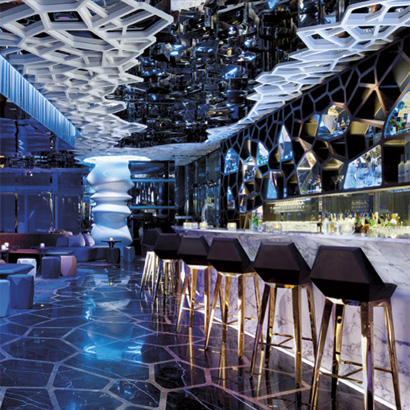
There have always been western-style restaurants in Hong Kong, but they were always very traditional. Concept restaurants are, more than anything, reflections of the personalities of their owners. The concept may reflect where the owners come from, or it may reflect where they would like to have come from. It may be a place, a time or an era, an idea or a desire. They tend to be owned by North Americans, or people who have spent a lot of time in the US, Canada or Australia. Hence, English is the lingua franca. Some concept restaurants are simple and fun, some are dead chic, others are cosy and comforting.
Neon Restaurants
Identified by huge neon signs, neon restaurants are usually very spacious with high ceilings, and they are brightly lit and well ventilated. And it’s a joyous cacophony within. This is where Chinese people go most often when they go out to eat. The menus are very extensive, and most are Cantonese. Most neon restaurants have at least one English speaker on duty at any given time. Quite often it’s the head waiter, so you’ll generally get pretty good, though utilitarian, service. On the outlying islands their counterparts are the outdoor seafood restaurants. They are basically neon restaurants that have swapped their neon signs for terraces facing the water. And the grandest neon restaurants in all Hong Kong are the floating restaurants on the south side of Hong Kong Island.
Working-Class Restaurants
Dining in Hong Kong can get expensive. It can also be intimidating with such a wide variety of choice, and strange and unfamiliar venues and customs. And did we mention that it could get expensive? And so we patronise everyday low cost Chinese restaurants. This kind of restaurant is the soul of Chinese gastronomy: unpretentious, a bit earthy, a place of exuberance and life affirming noise. This is a restaurant in the truest meaning of the word. It comes from the Latin verb meaning ‘to restore’, and this is where people come to be restored, in body and in spirit. The food is wholesome and plentiful. And all the hubbub, bustle and kitchen clatter serves to restore the spirit, to make one feel part of this greater whole.
Noodle & Congee Shops
Hong Kong would grind to a screeching halt if it woke up one day and found no juk (congee; rice porridge) and no noodles. These eateries are found virtually everywhere that humans can be suffered to walk upon the ground. It’s Chinese fast food, comfort food and peasant fare all rolled into one. Noodle and congee shops are almost always on the ground level, close to where life is taking place. We are not aware of any noodle shop on the top floor of a major hotel. They are most common in Kowloon, but you’ll find them anywhere there is foot traffic.
Roasteries
Chinese restaurants specialising in roasted or barbecued meats are common in Hong Kong. You’ll know them when you see them; they have all their wares hanging in the window. However, unlike a western steakhouse these are not places in which to indulge in mountainous portions of animal flesh. Indeed a typical meal at a Chinese roastery would be a very balanced one. A common lunch here might be a simple noodle soup garnished with a few slices of roast duck. A dinner might be comprised of vegetables, rice, soup and an ample portion of roast pork. Of all the roasted meats available in Hong Kong the most popular is goose. The roast goose restaurants of Hong Kong are beloved by the people although, curiously, they are not as numerous as duck or pork roasteries.
Yum Cha Houses

In the long view of Chinese culinary history, dim sum is a newcomer. A mere 1000 years old. Still, in this brief time the Chinese have managed to develop around 2,000 varieties of these morning and lunchtime treats. The larger yum cha houses will offer up to 100 items on any given day. You’ll be able to have dim sum every day of your stay in Hong Kong and not eat the same thing twice. Eating in a yum cha house can be quite an experience. In a traditional yum cha house there is no menu. Instead, ladies (they are always ladies) carry trays or push little trolleys laden with all the goodies. There is no succession of courses. There is no ‘this only goes with that’. Your table will soon be piled high with steamer baskets and other containers, teapots, crumbs and spills. In our opinion the best time for dim sum is 10-11am. If you come earlier or later, the noise, the rush for vacant seats, the chatter and clatter of waitresses pushing their trolleys, and the overall bustle can make the whole thing look like the New York stock exchange. On the other hand, maybe that’s your cup of yum cha.
Dai Pai Dong
The dai pai dong is usually a mobile concern that can flee the cops when they try to shut it down for being unlicensed. And they are an institution fast going the way of high tea and fish & chips, becoming a culinary fossil, albeit one of great sentimental value. They were visible at all hours, but especially after dark. They congregated in such numbers down by the waterfronts that the festive scene of dining, socialising, hawking of wares, juggling, magic or fortune telling was known as a poor man’s nightclub.
The term dai pai dong literally means ‘big licence food stall’, and refers to the large sheet of paper on which their licence was printed. Sadly, in the 1980s the government stopped issuing these big licenses. Those licences still in existence are permitted to remain in business until the second generation. That is, the current licence holders can pass it on to their children, should they wish to make use of it. But when they expire, so does the big licence.
Speakeasies
There are numerous unlicensed restaurants in Hong Kong and not all are dai pai dong. Many are proper sit-down places and are among the best in town. Just ask the government officials who are dining there. They tend not to invest much in decor, after all, such finery could end up in a police auction. But the food is magic. They are owned and operated by people who are in the business for the love of it. Often times the restaurateur is by day a broker, or a manufacturer of garments, or even a police officer. But by night they are the Scarlet Pimpernels of Clandestine Cuisine, bringing you their illicit best.
You have to know somebody to get into a speakeasy. You have to know somebody just to find one. But all serious gastronomes know a few. When you are invited you will be told to rendezvous at a secret location at a certain point in time. Do not be early. Do not be late. One of the cardinal rules of both espionage and illegal provender is punctuality. At the appointed hour people will emerge as one from the shadows, from behind bushes, from around corners, and converge upon a suddenly opened door. Now rush in, quickly, for the door must close before the cops cruise by.
Soy Sauce Western
These eateries serve western-style food for the Chinese palate. Consider a meal of spaghetti with brown gravy, mashed potatoes eaten with chopsticks, breaded and fried pork chops, Swiss chicken cooked in soy sauce. Yum! One of the best examples of this is Tai Ping Koon restaurant (6 Pak Sha Rd, Causeway Bay). It was founded in 1860 by Mr Chui Lo Ko, who originally worked as a chef for a western trading company in Guangzhou, and his specialities were western dishes. Later Mr Chui opened his own restaurant in Tai Ping Sha, Guangzhou, and he named it after the place. It was the first restaurant in Guangzhou specialising in western cuisine. Three of his signature dishes, roast pigeon, smoked pomfret and Portuguese-style baked chicken, were celebrated among aficianados in south Guangdong Province and are standards on the menu even today, a century and a half later. Tai Ping Koon’s influence reaches far, and offers the curious Chinese diner a tentative exploration of western cuisine, but with select Chinese ingredients providing a comfort factor.
 0
comments
0
comments