Warung Bebas

Wednesday, October 6, 2010

Beautiful Caves in Spain

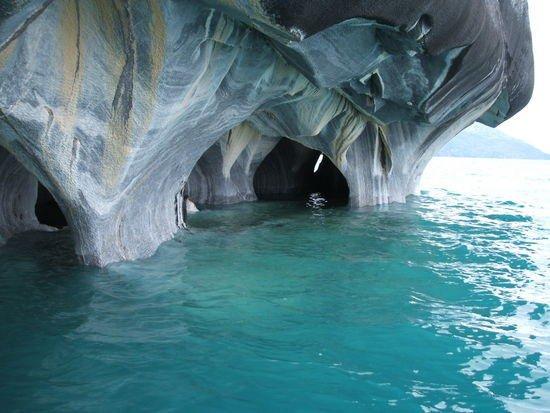
This Cave of Wonders is an extraordinary decorated cave. Huge halls and passages decorated with all the speleothem you expect: stalagmites, stalactites, straws and shawls. Some of the chambers have pools and the 70 m high salón del gran lago (hall of the great lake) contains a big subterranean lake. The cave is lighted by inderect light and a sound system allows the playback of music. 
They play the sinfonía del agua by the local musician Luis de Pablo and the suite Gruta de las Maravillas by Don Primitivo Lázaro. The system is located is a small outcrop of lower Cambrian marble, limestone which was 


Incredible Natural Formations in The World

Whether you enjoy outdoor adventures or surf the great beyond from your computer chair, it’s easy for the human brain to see complexity and touches of man-made civilization in the impressive natural formations of our world. Our brains are wired to mistake culture when nature mimics man-made structures. From geometrical faces carved by the forces of nature to sleeping giants in the sea, here are the 18 strangest yet most amazing tricks of nature creatively mocking man’s design. 


Rainbow and Cracked Fairy Chimney
 Vastly extreme landscapes exist in central Turkey. Magical fairies are said to have created extraordinary scenes.  A thick layer of volcanic rock and ash helps to protect these beautiful stone formations. Over eons of time, the basalt cracks and the much softer inner stone begins to erode and wash away. This “Fairy Chimney” appears to have a window overlooking an enchanted land. Nature added a rainbow in this magnificent view.

 Dead Man – Sleeping Giant
 Off the coast of Ireland, near the Blasket Islands, this rock formation is known as the Dead Man or The Sleeping Giant. With foreboding dark clouds hanging low over the small island, this natural rock structure looks like a man who laid down to sleep on the water. Minard’s Head, the stunning mountainous countryside where The Sleeping Giant waits, has been forgotten by most guides and therefore by most tourists. The Dead Man is surrounded by peace and tranquility with only the low crashing sound of the waves on the rocky shore, as forgotten as the ruins of the castle nearby.

Indian Head, Witch’s Face, Building Blocks, Australian Heart
 Nature has been making the most gorgeous art for countless centuries without any help from man’s technology. In the Colorado Rockies, this great red stone face of an Indian chief keeps a watchful eye as man tears up the Earth. His distinct triangular face, large brow, long nose, and mouth stand out in contrast to the mountain. (upper left)
Decorating Laguna Beach, this natural rock formation appears to the human eye as a silhouette of a witch’s face. If viewed from the proper angle, this series of jutting granite ledges gives man another illusion of itself. Face-like stone formations are common around the world. The craggy nose, pointy hair, and elongated chin are easily visible on the witch’s face. (upper right)
In Peru, these stone formations were once thought to be ruins from an ancient “Lost City.” Archaeologists and geological analysis proved these rectangular rocks are a natural design. Each architectural piece is made of sandstone that showed no signs of intervention by the hands of man. Instead of ruins from the Inca people, nature once again created rock formations that look like they were made by man. (bottom left)
Found at Ayers Rock, Australia, this indentation in the rock looks like a red heart. Uluru is a huge sandstone rock formation that is sacred to the Aboriginal people. Uluru National Park is considered an Australian icon. Standing 1140 feet high, most of the red rock is burrowed beneath the ground.  The aboriginals believed a turtle-spirit changed into Ayers Rock. The area has many caves and springs where the Aboriginal people survived.  It is as if nature carved this heart in an area well-loved by the Australians. (bottom right)

Ancient Walls and Building Blocks
 In Scotland, near the eastern coastline of the Caithness district, these magnificent rocks look like ancient building blocks and man-made walls. Instead, ravaging winds and the turbulent sea have carved out the rocks over many centuries. A human’s visual perception mistakes natural forces for complex right-angled blocks and walls. Nature, not technology, molded and carved these millions of colored stone layers.

Giant’s Causeway, The Old Man of the Mountain, Footprint, Stone Forest
 In Northern Ireland, the Giant’s Causeway stepping stones lead into the sea. Extremely active volcanoes spewed molten lava which solidified into a substantial plateau. Formed at least 50 million years ago, the molten magma  cracked and fractured as it quickly cooled into igneous rock. These geometric stepping stones made by nature’s hand have mesmerized humans for an eternity. (top left & bottom right)
This Great Stone Face can be found in the White Mountains of New Hampshire. Formed by glaciers millions of years ago, The Old Man in the Mountain resides 1200 feet up with stone shelves that are 25 feet wide and 40 feet tall. A face, a jagged and craggy profile, is visible when seen at the correct angle.  The Old Man of the Mountain is made up of a series of five granite cliff ledges. What Mother Nature created, the human eye sees as a face-like stone formation. (top right)
Near Gujarat India, in a breathtaking land of cave temples, this rock formation was found. Gujarat civilization is thought to date back from 3000 to 1500 BC. This ancient natural rock formation has rested, untouched, for untold thousands of years. Brightly colored and carefully sculpted by nature over time, the textures and patterns in this rock appear as if it were a human footprint. (middle left)
Spotted via satellite in Varna, Bulgaria, this unique geological formation looks like a Stone Forest. The Bulgarian name for these rocks is “Pobitite Kamani” which means stones beaten into the ground. These white rock formations, a fabulous natural phenomena, may date back some 270 million years. The stones are clustered together in some places and spread apart in others as if the forest were seeded eons ago. Tall rocks look like trees made of stone, broken and fallen with age. Once again, to the eyes of man it appears as if man-made, but nature created an illusion of a forest made of stone. (bottom left)

Moeraki Boulders
 Along the coast of New Zealand, overly large and spherical boulders lie scattered on Koekohe Beach. Exhumed by coastal erosion, these boulders were created by the cementation of Paleocene. Nature formed these huge round rocks similar to how an oyster makes a pearl. Instead of a grain of sand, these beautiful boulders began as a fossil shell or perhaps small pieces of wood. Lime and minerals from the sea accumulated over time and grew up to perfect spherical shapes, some up to 9 feet in diameter. Local legend spins a tale of how these massive gray rocks came to rest on the shore, another example of man attempting to explain away how nature could form something so spectacular.

Troll
 Nature chiseled this ancient rock near Nas, located on the Greek Island of Icaria. Alongside the spectacular beaches, ruins of an ancient temple dedicated to the Goddess Artemis remain. People have lived in Icaria since at least 7000 BC. Nas was a sacred spot and the Temple of Artemis was considered a last stop before sailing the treacherous seas. Sailors made sacrifices to the Goddess Artemis, the patron of sea-farers. Like a fierce stone creature, this natural formation looks like a hideous troll perched on the rocky outcropping over the exquisite aquamarine sea.

Fairy Chimneys
 In Cappadocia, Turkey, eons of time have eroded jutting volcanic rock formations to create mystical Fairy Chimneys for as far as the human eye can see. The outer hard layer of stone is less easily-eroded than the inner soft sedimentary rock. Primitive people carved out homes, chapels, and tombs in the stone. This territory in Turkey is epically strange yet enchanting. This mystical and peculiar landscape continues below ground where the rocks have been tunneled out to create underground and otherworldly cities.

The Sleeping Ute
The Sleeping Ute Mountain is on the “Ute Mountain Ute Reservation” in northern New Mexico and southwestern Colorado. The cluster of angular crests is the profile of “The Sleeping Ute.” Alone in an otherwise flat land, the mountain peaks soar from 5 to 12 miles high. The Sleeping Ute is supposed to resemble a Ute Chief lying down with his arms folded across his chest for all eternity. The legend associated with this land is that a Great Warrior God helped to fight against the evil ones. During the mighty battle, his feet formed into the mountains and valleys. The Great Warrior God was wounded and fell into a deep sleep as he rested to recover. His wounds bled, becoming the living water. Rain clouds form out of his pockets. He continues to care for his people. The changing of this blankets bring the seasons: dark green, yellow and red, and white.  A 3-day Sun Dance is held every year over Sleeping Ute’s heart. His head is to the right while his folded arms, hips, knees, and toes stretch to the left.

Underwater Arena
When diving in Japan, this ancient underwater treasure awaits to tickle or to trick the visual senses. Yonajuni Monument has long been debated as either made by nature or made by man. This popular diving location boasts stone terraces, stone circles, and perhaps even a stone arena that are buried deep underwater off the coast of Japan. Have these massive natural structures been chiseled by strong currents or by an ancient alien civilization long gone from the land? Mankind sees underwater ruins, angles and walls. It may be nature simply looking like it is man-made. The arguments rage on of whether Yonajuni Monument was artificially or naturally formed.

Strange Natural Formations
 Although this mossy rock appears to have man-made rectangular patterns on top, this phenomena is actually nature fooling the eyes of man yet again. Patterns like a fishing net weave across the rock, making the stone appear to be man-made. Nature coated the angular lines with layers of green and yellow moss. The squared shapes embedded in the rock came about during the formation of a huge boulder. These patterns formed naturally over hundreds of years, not a trick to confound, but a gift from Mother Nature.

Natural Sphinx
sphinx
Located In Pakistan, Hingol National Park is both extensive and exquisite. It ranges from a natural habitat for wildlife where a river runs through it to a dry and desolate desert. Hingol National Park contains four ecosystems: desert, Arabian Sea, open plains, and rugged mountains. Numerous birds, crocodiles, turtles, gazelles and marine life flourish in the diverse environment. It is a land where nature rules. This rock formation resembles the Great Sphinx of Giza. This Sphinx, however, is a natural one that was sculpted by coastal semi-desert winds for millions of years.

Most Bizarre Landscapes in The World

Sometimes, trips are remembered for experiencing something a little out of the ordinary. Urban landscapes and buzzing metropolises offer an interesting insight into a country's way of life, but delve a little deeper and you may just discover a side of the country seen by very few.


1.Salar de Uyuni: Bolivia

Salar de Uyuni
A blinding sheet of white awaits you at the Salar de Uyuni, the world’s largest salt lake, where you are in a simple world of blueness and whiteness, or even more bizarrely where seasonal waters can reflect the sky and dissolve the horizon.
The landscape here is simply awe-inspiring - miles and miles of dazzling salt flats interspersed by cacti covered islands - it all makes for an unearthly adventure.

2.Mount Bromo: Indonesia

Mount Bromo
The Bromo Tengger Semeru National Park is found in east Java, Indonesia, and is home to Mount Bromo, one of the country's most iconic sights. This active volcano stands an impressive 2,392 metres above sea level in the middle of the protected Sand Sea plain and is best viewed at sunrise when the morning light casts an orange glow across the landscape.
A mix of barren, volcanic peaks and gravel plains makes the surrounding area of Mount Bromo particularly unusual and an absolutely unmissable part of any trip to Indonesia.

3.The Skeleton Coast: Namibia

The Skeleton Coast
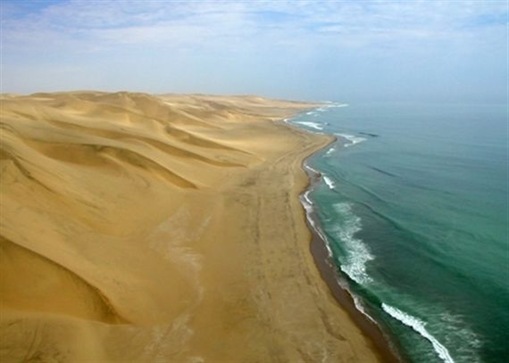
The Skeleton Coast is an aptly named barren area along the coast of Namibia, and although stark, is absolutely stunning. Rock formations, clay castles, reverberating dunes and gravel plains covered with ancient welwitschia plants can all be seen in abundance, making for a truly spectacular landscape.
Strong currents, treacherous fog and shifting underwater sandbanks ensured that many early explorers’ ships were wrecked here and they can still be seen now, many metres from the shore.

4.Rotorua: New Zealand

Rotorua
Rotorua is situated on the southern shore of Lake Rotorua on New Zealand's North Island. Throughout and around the town steamy mineral lakes, bursting geysers and bubbling mud pools release a pungent smell as hydrogen gas pours out of countless bores and ground fissures.
People have been bathing in the hot springs for centuries, believing the mineral-rich waters have health-giving properties and a soak in one of the many spa complexes is highly recommended.

5.Tsingy de Bemaraha Strict Nature Reserve: Madagascar

Tsingy de Bemaraha Strict Nature Reserve
Described as a forest of rocks, the tsingy of Madagascar are sharp, needle-like limestone pinnacles that have been carved into the landscape by nature's elements.
The Tsingy de Bemaraha Strict Nature Reserve is located in the remote west of Madagascar and is home to birds as well as Madagascar's most famous resident: the lemur. Exploring the tsingy can be a challenging but very rewarding activity as you negotiate your way through this geological wonderland.

7.Bourke's Luck Potholes: South Africa

Bourke's Luck Potholes
Named after one Thomas Bourke who accurately predicted gold in the area (although he never found any himself), Bourke's Luck Potholes are located in Mpumalanga, South Africa.
A natural feature created by swirling water erosion, these deep, cylindrical potholes mark the beginning of the Blythe River Canyon and are on of the most impressive geological sights in South Africa. Easily visited from White River or Hazyview, Bourke's Luck Potholes are not to be missed.

8.The White Desert: Egypt

The White Desert
The white desert, or Sahara el Beyda, is situated approximately 30 miles north of the Bedouin village, Farafra in Egypt. Not suprisingly, the name comes from the cream coloured sand and chalk rock formations of the area, formed by the occasional sandstorm.
Visit this vast landscape by moonlight to truly appreciate the beauty of the area.

9.Longji: China

Longji
Only two hours north of the popular tourist destination Guilin, the magnificent and ancient rice terraces of Longji, the ‘Dragon’s Backbone’, offer an awe-inspiring location to experience Zhuang minority culture first-hand.
Dating back over 800 years, the terraces are built into the hillside and change seasonally, the best time to visit being late spring (May) and autumn (September).

10.Kamchatka: Russia

Kamchatka
Kamchatka - The Land of Fire and Ice - an apt title for one of the world’s most remote, forbidding yet spectacular destinations.
This volcano-spined peninsula, jutting into the icy Bering Sea in Russia’s Far East, is home to native reindeer-herding peoples, huge grizzly bears and Steller’s sea eagle, all set to a seething backdrop of boiling hot springs and spouting geysers.

Tuesday, October 5, 2010

Bizarre toilet themed restaurant

How bizarre can theme dining get? Jail themed restaurants, hospital theme restaurants and toilet themed restaurants are so popular that it only shows that people flock to places which promise excitement. I found this Toilet theme restaurant in Taipei a bit too grotesque for my taste though the patrons may beg to differ. Enter the restaurant and you will find that the seating are made from toilet bowls. 
 As you settle in and order from your menu, you are served in mini toilet bowls on your table which is a glass topped jumbo bath tub.


 Obviously, you end up your dinner wiping your hands and mouth with toilet roll hung above your table and oh yes, do not forget to take your camera along to click pictures and watch the amused looks of friends when you share it with them.


Get drunk inside a tree trunk!

Some people would do anything to get a drink and that I mean in a very positive way. They can travel long and hard and find the most unusual location to make sure that their days do not end up dry. In fact there is nothing like the will of a man in love and a man looking for a drink. Well, that may not be the best comparison to make but it’s true. So the people of South Africa have found a unique and very special destination to quench their thirst with a mug of beer. They have found it in a tree trunk!

It is not surprising at all that a nation as blessed in natural resources like South Africa has found a way to open up a bar inside a tree trunk. The only pub in the world that is located inside a tree trunk can be found in Limpopo, South Africa. The pub has been created inside a 72ft high majestic Baobab tree and has a circumference of 155ft. The Baobab tree is said to go hollow in its trunk after a lifetime of 1000 years. Hence the hollow interior of this tree was made by a very natural process.

The Sunland Farm which houses this amazing tree is owned by Heather van Heerden and the family came up with this idea of making a pub out of the tree trunk; maybe to quench the thirst of the locals in an eco friendly way. While they were clearing the tree trunk, they apparently found artifacts like a Bushmen bed made from rocks and Voortrekker’s tools and wagon pieces. The tree is said to be more than 6000 years old and that obviously means it must have witnessed plenty of things.

 The pub attracts nearly 7000 visitors each year and it can host 15 people at one time, with comfortable seating for them. It has a low roof but it still looks very comfortable and it looks spacious enough for a few people. But the family claim that they can cram up to 54 people inside the trunk! The Baobab trees have always been known as ‘trees of life’ as they can give food, water and shelter to individuals. Now they have gone a step further with some human innovation; they can give you a mug of beer too.

It's a church and a bookstore, it's an architectural wonder!

It is not often that religion and modernity go hand in hand. Most often they are perceived as conflicting ends with the liberal accusing the church of trying to keep the world in ignorance so as to keep its position strong. The world has, over centuries, seen a constant fight between scientific progress and religious practice. But here is a perfect example of how they can go hand in hand; how the pious can store and present an opportunity for the modern to sustain and spread.
Selexyz Dominicanen in Maastricht, Netherlands is a Selexyz bookstore that has won the Lensvelt de Architect Interior Prize 2007 for not only its unique design but also its thought of integrating the Medieval with the modern. The book store is actually present in an 800-year old Dominican church and is said to have the largest stock of books in the city. The bookstore converted just 750 m2 of space available for commercial purpose in to a huge shop, with both creativity and great designing. The makers have constructed a multi-storey steel structure along the walls of the church which takes advantage of the awesome height of the church.
 
The church being a construction of medieval Europe offers great height to work with and the makers of the design have used that to the fullest. They have made the huge steel structures in such a way that they stand completely detached from the church, so as to not alter the actual structure. The steel structures have elevators for customers to use and the also have walking space. The books are placed in a structured way so as to minimize wastage of time in searching for the hottest selling books.


Hotel de Sal Playa: Wine, dine and sleep on salt!

Salar de Uyini in Southwest Bolivia, is one of the favorite destinations of adventure seekers. The endless white stretches of salty plains on the word’s largest salt desert leaves you with breath taking visuals. Dramatic sunsets, giant cactuses, hot springs and sulphur pools are something you should not be missing on your trip there.

Oh yes, do not forget the multi-colored lakes! You have a white lake due to borax, a red lake infested with red algae, a yellow lake due to sulphur concentrations, and blue one from the manganese.
You must be ‘Roman in Rome’ to soak into the real culture of the place you are traveling to. So, if you can put up in the ‘Ice hotel’ in Norway to see how the life an eskimo is, what do you do when you go to a salt desert? Stay in a ‘Salt hotel’, of course!

 Every thing (well, almost) in the ‘Salt hotel’ is made up of salt blocks offering a unique experience to the travelers. So you sit on the salt chairs, eat on salt tables, enjoy your wine in the salt bar and sleep on salt beds. In short, you sit, eat and sleep on salt. You are even given instructions to be careful enough not to lick the walls but do give it a try to check if it’s genuine!


Amazing Traveller Copyright © 2012 Fast Loading -- Powered by Blogger